Can’t find the best solution for missing and broken teeth for people aged 40? Our dentists discuss below.
It is said that a smile is a curve that sets everything straight, and wouldn’t you agree with that? The smile is the most beautiful feature of a person and when one has a remarkable smile then one also has confidence.
As a person starts to age, they become more conscious of how they look and how to achieve a more youthful appearance; missing and misshapen teeth will do the opposite.
It is a known fact that as you grow older, your teeth start to fall out which shows signs of aging and so regular visits to the dentist start to occur. A common practice is fixing up the missing teeth but what are the different ways in which this can be done?
Different Ways to Replace Teeth
When there is a tooth missing at the very back of the mouth such as the molars, it causes strain to occur on the other teeth in the same arch because they have to compensate for the missing tooth. This increases pressure on the other teeth in the arch can damage them and cause dents to occur on their surfaces (proximal and occlusal ones).
Furthermore, when any front teeth are missing that is simply a problem of aesthetics. No one likes walking around and smiling when there is a huge gap in the front of their mouth.
The different ways to return the teeth to their normal state are…
Dentures – It is a plastic appliance that can simply be removed and placed back into the mouth as you would do with retainers; there are two types of dentures.
Complete Dentures – These are for when almost all the teeth are missing, so a few more are removed and when the gum has healed then the denture is placed in. It is common especially in old-aged people but is also not the most comfortable solution.
Partial Dentures – These are for when few teeth are missing and can replace them with fake ones while keeping the other teeth in their positions firmly.
Bridges – This works for when there are one to two missing teeth. The adjacent teeth around the missing tooth are prepared by being reduced in size so that the bridge can fit in easily.
The bridge consists of prepared crowns that replace all three teeth in a row (one missing, two adjacent teeth altered). Although this method is low in cost, in about 70 to 80% of people these dentures come out after 10/12 years.
Implants – These are titanium roots that are surgically placed into the jawbone of the patient’s mouth, and are allowed to fuse with it. Although this procedure sounds painful, it is quite simple and is now the modern and main prosthetic procedure used to replace missing teeth. It also has a success rate of about 96 to 98%, because unlike the other two; implants mimic a natural tooth better.
Implants may cost the most out of the three options available, but they also last the longest and provide comfort like no other.
Conclusion
For most people, it is essential to have a winning smile and a full set of teeth to go hand in hand with that. All options for replacing teeth lost or broken have their advantages but the one that suits the patient’s comfort level should always be chosen above all else.
Comfort is key and so it is important to choose what looks best and what feels best. There are many dental clinics at Westmont, IL that ensure that a patient is left with a youthful smile even at the age of 40.
Celebrity Smiles and General Dentistry, in Westmont, IL provides you with the right consultancy and perfect dental treatments.
Dental implants vs dentures for 40 plus individuals – Which is the safest and most popular option?
According to the American Association of Oral and Maxillofacial Surgeons, about 69% of adults aged 35 to 44 have lost at least one of their permanent teeth for various reasons, i.e., tooth decay or an accident. If you are also suffering from tooth loss, your dentist might have offered you two options to get a beautiful smile back, i.e. dental implant or dentures.
Both of these options have their benefits and drawbacks. However, for people aged above 40, these dental accessories become crucial if they wish to restore normal mouth functions. So without further ado, let us figure out which option is the best suited for you.
Dental Implants for Seniors
Dental implants involve adding a new tooth inside your jaw which is made of biocompatible titanium. The process is completely painless and very long-lasting.
Let’s take a more in-depth look at the pros and cons of Dental Implants for Seniors:
Pros
They Prevent Bone Loss – When you lose a tooth, the bone mass slowly deteriorates around the lost tooth. Getting an implant stops that bone loss, which prevents future teeth losses.
They Look Natural – Dental implants look natural as they are tailored precisely to match your tooth’s size and color.
Gives a Perfect Bite – These implants work as a tooth as well, giving you the perfect bite every time.
No need for Adhesives – No glue or adhesive is required to keep the implant in place.
They are Permanent – No need for frequent visits to the dentist; once the implant is in, there is no coming back.
Cons
Not Possible on Weak Gums – If you have weak gums, then this procedure cannot be performed.
Slight Swelling and Pain – As this is an invasive dental procedure, you can expect some swelling and little discomfort.
Bleeding – Slight bleeding is expected for 24 to 48 hours. There will only be a few drops or minor spotting, nothing serious.
Dentures for Seniors
You might be familiar with dentures from movies and cartoons. They are replacements for missing teeth and surrounding tissues that can be removed anytime.
There are two main types of dentures :
Partial Dentures – They are used when only a few teeth have been lost.
Complete Dentures – They are used when all the teeth are missing.
So now that you are familiar with dentures, let us dig deeper into the pros and cons of it:
Pros
Aesthetically Pleasing – Dentures are very pleasing as they cover the complete infected area and look beautiful throughout.
Applied on Weak Gums – Dentures can be used on weak gums without any discomfort and bleeding.
Easy to Maintain – Dentures are very easy to maintain and can be washed effortlessly.
Less Expensive – Dentures are budget and pocket-friendly, making them a good choice for the elderly on a tight budget.
Easy to Modify – In case of teeth loss in the future, dentures are very easy to modify.
Cons
Tend to Wear out – You might need to replace them after some while.
Increased Risk of Gum Disease – Food can easily be trapped between the gum and the dentures, which can cause infection.
Need Adhesives – Some dentures require adhesives, which can make the process quite messy.
Conclusion
Both procedures are excellent for people aged above 40, but if you have healthy gum and only one or two teeth are missing, opt for dental implants. If your gums are weak and cannot withhold the dental implant or almost all of your teeth are lost, dentures are a viable option.
Celebrities Smiles and General Dentistry performs these procedures to restore your confidence; select that suits you the best. They are located in Westmont, IL.
Do individuals above the age of 40 need dentures? Dentists in Westmont weigh in
Aging is a natural and irreversible process. Aging leads to multiple undesirable changes such as loss of the teeth. Poor oral health and hygiene and a genetic predisposition to tooth loss are some factors that accelerate this process.
Teeth are an important part of the digestive system and the loss of one or more teeth impacts the entire body. The food is digested poorly, as a result of which you face gastrointestinal issues.
To substitute loss teeth, dentures have come into action. A denture is an adjustable and removable substitute for lost teeth and gums. They are also known as false teeth. Dentures are of two types:
Your dentist will determine the type of dentures you will need depending on the extent of teeth damage and condition of your gums. Dentures are mostly needed by people who are above the age of 40. Let us take a look at some of the common reasons why people above this age need dentures.
Loss of Natural Teeth
Dentures act as substitutes for lost teeth. Teeth may be lost due to injuries. However, in most cases, tooth loss occurs due to poor oral hygiene. Untreated and undetected dental decay can result in the weakening of tooth structure and its gradual loss.
In any event, losing teeth gives rise to a plethora of problems such as deterioration of jaw bone and dentures are there to fix these problems.
Issues in Chewing and Speaking
This is related to the previous point. If a couple of teeth are missing then you will find it difficult to chew, speak, and smile properly. This is where dentures come to action. They will save you from the troubles of improper speaking, chewing, and the embarrassment of flashing a half-tooth smile.
Speech pronouncement can be particularly embarrassing if your front teeth are missing. Dentures bring back to life all the important oral functions such as talking and chewing.
Changing Facial Contour
The structure of your face can change drastically if some of your teeth are missing or they are not fully developed. Because the teeth structure is not in place to hold them, facial muscles start to sag and droop. As a result, the face starts to appear hollow. With dentures in place, the appearance of the face improves and the sagging is reversed.
This boosts self-confidence and individuals are able to carry on their day to day tasks with ease and confidence.
Taking Care of Dentures The Right Way
Now that we have understood the importance and need for dentures, let us take a look at how to take care of them.
Rinse Dentures After Eating
After eating food, remove the dentures and rinse them thoroughly. This will help you get rid of food particles and debris. The best way to clean dentures is to soak them in a glass of clean water for a while. Gently run a brush over them while ensuring that you don’t damage the clasps that hold them together.
Soak Dentures Overnight
Dentures require moisture to keep their shape intact. To ensure their shape, soak them in water or a denture solution every night. Let them remain soaked overnight. Read the instructions on the denture-soaking solution before performing this action.
Clean Dentures Properly
The denture-soaking solution is full of chemicals. Before putting them back on, make sure you thoroughly rinse and clean the dentures to get rid of the chemicals. Otherwise, it can cause vomiting and other issues.
This information has been brought to you by Celebrity Smiles and General Dentistry. They are located in Westmont, IL.
Considering dental implants? Are dental implants safe for people aged 40 and above?
Tooth loss happens due to multiple reasons. Some of which include decay, injury, or periodontal disease. Losing a tooth is a painful process with multiple consequences such as indigestion, difficulty in chewing, loss of jaw bone, and difficulty in smiling. To replace lost teeth with artificial ones, bridges, dentures, and dental implants are used.
Dental implants are the most modern and feasible options for substituting lost teeth. An implant is a surgical fixture that acts as a teeth substitute. It is fixed into the jawbone where it attaches itself to the jaw bone in a few months. The dental implant acts as a replacement for the lost tooth and performs chewing function very well.
A well-placed dental implant does not stand out and offers stability to the neighboring teeth. In general, people lose teeth and require dental implants after crossing a certain age limit. Let us see if dental implants are safe for people who are above the age of 40.
What Makes A Candidate Suitable for Receiving Dental Implants?
Dental implants are suitable options for people who have lost a couple of teeth or all of their teeth. A suitable candidate must fulfill the following criteria to receive his dental implants:
Have good health and there shouldn’t be any underlying medical complications.
Medical conditions such as diabetes, issues with blood clotting, cancer, weak immune system, and drug abuse make dental implant surgery more difficult. The general well-being of a candidate is very important.
Have good oral health i.e. the mouth should be free of decay or other periodontal diseases. If there are signs of underlying decay, plaque, or tartar then they need to be treated before installing dental implants.
Have good oral hygiene.
Nonsmokers are more preferred candidates for receiving dental implants. If you are a smoker, you will have to quit smoking for a while after receiving your dental implants. Smoking can delay the healing process and the harmful components present in cigarettes can damage the gum and jawbone where the implant has been placed.
While there is no upper limit for getting dental implants, young adults below the age of 18 are not considered ideal candidates for dental implants. Reason being that their bone tissue hasn’t developed completely and the jaw is in the process of growing.
Suitability of Dental Implants for People Above the Age of 40
In light of the above facts, it is safe to say that dental implants are safe for people above the age of 40. There is a common perception that age is the most decisive factor when it comes to dental implants. However, age is not relevant when considering receiving dental implants.
A man in his 50’s maybe more suitable for receiving dental implants than someone in his 30s. Good overall health, dental hygiene, and lack of medical complications are important factors to consider when opting for receiving dental implants.
Dental Implants Vs Dentures for Elders
A few years ago, dentures were the popular choice for teeth replacement for elders. Dentures come with their own set of cons such as discomfort and not providing enough stimulation to the bone which eventually resulted in the loss of jaw bone. The advancement in technology has brought dental implants to the surface.
They offer greater convenience, are able to stimulate the jawbone, and offer a permanent solution to the tooth loss problem. Between implants and dentures, the former is the clear winner.
This information has been brought to you by Celebrity Smiles and General Dentistry. Their offices are located in Westmont, IL.
After Sandu saw how amazing his wife’s smile makeover was he decided it was his turn! He flew in from California and has been living out of a hotel for 2 weeks while I completed his work.
This is extreme crown & bridge work that we are very happy to do!
Sandu came in saying “I want you to fix my teeth like you did my wife’s” .. his chief complaint was when he smiles his teeth don’t show.
Dental implants for 40 plus individuals? Signs adults aged 40 need dental implants.
Many people believe that age is just a number and 40 is the new 20. As much as we want to believe it, sometimes our teeth will portray a different story. Dental deterioration can start in the early 30s and it can become much worse when a person reaches his 40s. Untreated dental diseases can lead to the loss of precious teeth and gums.
People who suffer from permanent tooth loss often opt for artificial teeth and dentures. Dentures are artificial devices that substitute natural teeth that have been lost due to old age or accident. Dentures are fixed inside the mouth where they are held in place by soft and hard tissues of the oral cavity.
Conventionally, dentures were required by senior citizens at the age of 70. However, a surprising number of patients who need dentures are 40 and above. According to a survey, 20 million women who are above the age of 40 require partial or full dentures for carrying out everyday activities.
Dentures are a last resort and all effort must be taken to protect precious teeth. If you fear you are suffering from tooth loss, take corrective action now. To do that, you should be able to identify the telltale signs that indicate early tooth loss. Let’s take a look at some of these signs:
You Have Loose Teeth
If you notice any gaps between your teeth or experience loose teeth that have become partially detached from the gum, then it is a sign that you are on the verge of losing teeth. Loose teeth are a manifestation of gum disease that has reached advanced levels.
Consult a dentist if you experience a shift in your teeth, so the issue can be handled at hand.
You Suffer From Awful and Recurrent Tooth Ache
The teeth are made of hard material and cannot experience any pain. Any sensation we feel is due to the nerves present inside the pulp which is the innermost layer of the tooth. If you experience severe tooth pain, it is a sign that the infection and decay have reached the center of the tooth after destroying the remaining three layers of the hard tooth.
Consult a dentist immediately and see if your tooth can be fixed by a simple filling procedure or through a root canal treatment. If the infection has reached an advanced stage then you may need partial dentures.
You Have Irritated Gums
Gums indicate the health of the mouth. If you have swollen, red or inflamed gums, it can be a sign of an underlying periodontal disease such as gingivitis in its early stage. Gum diseases are quite common and they often result in the loss of teeth.
Irritated gums require immediate attention and if treated at an appropriate time, gum disease may not cause irreversible damage. However, if it is not treated properly and on time then the infection spreads to the bone and dentures become a must.
You Suffer From Indigestion
Your gastro problems can be attributed to your weakened teeth. If you have loose or painful teeth, chances are that you will not grind and chew food properly. As a result, larger food particles will enter your digestive system and will cause indigestion, stomach ache, and other problems.
Regular Dental Checkups are Not a Part of Your Routine
Regular dental checkups can help identify underlying problems early on. If you are 40 or above and haven’t included regular dental checkups as a part of your routine, then you are at high risk of facing tooth loss and ultimately opting for dentures.
If you are reading in Westmont, IL, we recommend you to consult Celebrity Smiles and General Dentistry for all your dental issues.
Here are some of the top practices used by dentists for healthy teeth and gums.
Teeth are an important part of the body. They not only play a very vital role in the mastication of food but also contribute to the overall aesthetic appeal of a person. A bright and beautiful smile is an indicator of good dental health. It can only be achieved by practicing good dental hygiene.
The mouth is the gateway to the body. Everything we eat passes through the mouth. Our teeth get exposed to multiple different harmful substances during the course of a day. These substances can damage the teeth and result in the formation of plaque, tartar, and subsequently dental cavities.
The probability of these dental ailments can be minimized by taking good care of your oral hygiene. If you wish to have healthy teeth for life, you must take care of your teeth and gums. Celebrity Smiles and General Dentistry located in Westmont IL has brought to you 4 must-do best practices for excellent dental health.
Brush Regularly and Gently
Brushing your teeth twice a day is the most important and basic step towards achieving good oral health. The mechanical action of brushing removes cavity-causing bacteria and any plaque that has been deposited. However, brushing becomes most effective when done correctly.
The following precautions should be taken while brushing teeth:
Brush your teeth in a circular motion. Make sure that the toothbrush reaches all sides of the teeth.
Brush your teeth for 2-3 minutes twice a day.
Use a soft or medium-hardness toothbrush. Rigorous brushing with a hard-bristled toothbrush can damage the teeth and the gums. As a result, teeth may experience sensitivity, gum erosion, or irreversible damage to the tooth’s enamel.
As per the instructions of the American Dental Association, the toothbrush should be changed every 3-4 months. Opt for a soft-bristled toothbrush for protection against enamel damage.
Incorporate Flouride in Your Routine
Our mouth’s saliva contains important minerals such as sodium, calcium, and magnesium. These minerals play a vital role in replenishing the strength of teeth. Fluoride is an important mineral that helps in the strengthening of teeth and saves them from decay. Fluoride is absent from the saliva, hence it has to be obtained from outer sources.
Dentists recommend using fluoride-rich toothpaste and mouthwash. Multiple neighborhoods in the USA are supplied with fluoride-enriched water. World Health Organization (WHO) lays special emphasis on the provision of fluoride-rich water.
If you are not using fluoride-enriched dental accessories, it is time to make a shift to them.
Floss Regularly
The combined action of brushing and flossing is important for getting rid of food remnants and bacteria. Dental floss can remove debris from the nooks and creaks which are beyond the reach of a toothbrush.
The recommended way to floss is to gently push the dental floss on the gum line. Then embrace both sides of the floss and move it in an up-and-down motion. Be gentle in your motion of the floss otherwise, your gum will be injured and plaque will not be removed.
Use a Mouthwash Regularly
Most people skip mouthwash as they believe it is not as important as brushing and flossing. Experts agree that regular use of mouthwash helps reduce the probability of getting dental infections. Most mouthwashes contain chlorhexidine which is an antibacterial ingredient.
Swishing mouthwash inside the mouth allows it to eliminate bacteria and reduce the chances of infections. Mouthwash serves the following three purposes:
Reminirealizes and strengthens the teeth
Neutralizes the acidic content in the mouth
Removes bacteria from hard-to-brush areas of the mouth
For more details, visit Celebrity Smiles and General Dentistry. They offer services for general and preventive dentistry.
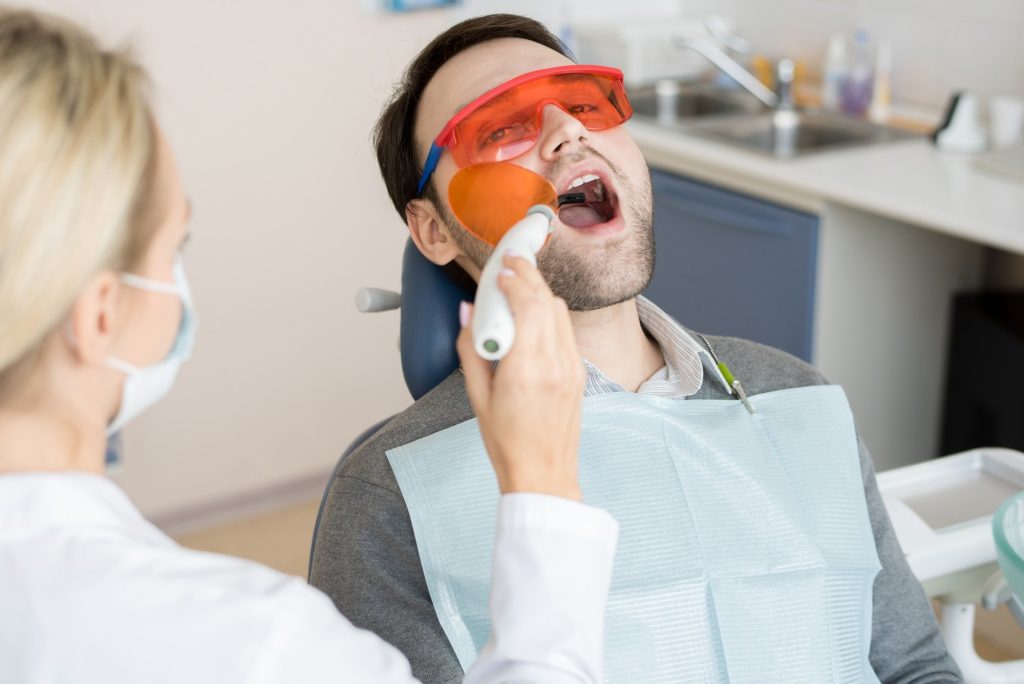
Learn in detail about laser dentistry benefits and its many applications from expert dentists in Westmont
Dental visits are one of the least favorite things a person has to do. Dental anxiety is a real thing and we all suffer from it. The ominous sound of a whirring dental drill stays with us for a long time. Most people associate dental appointments with pain and discomfort.
Laser dentistry is a panacea for these problems. More and more dentists are opting for it to make the dental procedures less painful and hassle-free.
Laser dentistry has a wide range of applications; it can be used to treat periodontal ailments, remove canker sores, and even help in teeth whitening. While laser dentistry is quite costly, the cost is a practical tradeoff for the lack of invasiveness and quick post-procedure recovery that laser dentistry offers.
It has been reported that the usage of laser equipment results in less blood loss and less tissue trauma. Additionally, the transmission of infections and diseases is minimal since no object besides the laser beam comes in contact with the surgical site.
Here are some laser dentistry benefits you should know about.
What should I Expect During My Dental Treatment?
Before starting the process, your dentist will sanitize the area and “freeze” the site of surgery with a numbing cream. In most cases of laser surgery, numbing creams suffice, and patients rarely experience any pain or sensation during the procedure. The dentist points the diode on the affected area which is usually a diseased tissue or calculus.
The laser beam selectively removes diseased tissues and germs, leaving the healthy tissues unharmed. This protocol also stimulates the regeneration of fibers, eventually replacing the removed tissues and healing the area.
Presently, laser surgery for dental treatment falls in either of the two categories.
Hard Tissue Laser: Suppose the task at hand requires cutting through enamel or some hard substance such as a buildup, which causes periodontal diseases and bad breath. In that case, your dentist might use a hard tissue laser.
Soft tissue laser: On the other hand, the soft tissue laser is designed for more supple regions – an excellent choice for extending gums, lengthening crowns, or frenectomy.
How is laser dentistry better than conventional methods?
Laser dentistry benefits are abundant, but perhaps the most significant advantage posed by laser dentistry is that it has fewer adverse effects than standard electrical methods. For instance, in most cases, the patient is less likely to experience pain during a laser procedure, so the anesthesia dosage administered during the surgery is also less.
Dental drill damages the surrounding tissues. As a result, the gums go into a state of trauma, post-surgery. Since laser dentistry is very precise, the surrounding tissues do not suffer much. This means that a patient can recover speedily without stitches or surgical sutures.
Laser dentistry is a noiseless process. Patients feel more at ease during laser procedures compared to being treated with whizzing dental drills.
Am I the right candidate for dental laser surgery?
That is for your dentist to decide. Nevertheless, dental procedures that involve laser tools are very safe and reliable. Dentists recommend them as minimal anesthesia, and follow-up is required for laser surgery. Even patients with pacemakers are recommended a laser procedure since electrical surgery might mess with their heart rate.
Laser dentistry has wide applications. It can be used for cosmetic purposes such as brightening your smile before your wedding day or for sawing teeth to fit crowns and bridges. It is also used for retaining tooth and gum health such as plaque removal, tartar removal, and tooth filling.
Now that you know the many laser dentistry benefits, whatever the need be, you can always drop by at Celebrity Smiles and General Dentistry for consultation. They are located in Westmont, IL.
A quick guide to dental crowns to help you learn the basics about this procedure.
Our teeth are an important part of our buccal cavity. They perform the important functions of grinding and chewing the food to make it more digestible.
Over time, teeth get damaged due to wear and tear or certain bacterial infections cause dental cavities and decay. Damaged teeth can’t perform their regular functions efficiently unless they are repaired.
Dental crowns are one such way of restoring a tooth to its original strength and shape. This guide to dental crowns will look at what are dental crowns, their types, and their benefits.
What are Dental Crowns?
Dental crowns are synthetic caps that resemble a tooth. They are placed over the broken or damaged tooth after it has been treated. Dental crowns improve the appearance of the tooth and restore the damaged tooth to its previous strength.
Who Needs A Dental Crown?
Patients who suffer from the following conditions require dental crowns:
Weakened tooth due to dental decay or cracked tooth due to accident.
To cover the remaining part of the tooth has been chipped away.
To provide support to a tooth with which has undergone root canal surgery and there isn’t much tooth material left.
To provide support to a dental bridge.
As a covering for misaligned and discolored teeth.
To provide a cover for dental implants.
What are Some Common Materials for Dental Crowns?
Dental crowns are made of various materials. Let’s take a look at the most common dental crown materials:
Metal
Dental crowns made of metal are strong and can withstand force and pressure. They are not prone to damage like other materials and rarely break or chip away. One positive point of metal crowns is that they only require a small quantity of tooth to be removed for their placement.
Chromium, gold, nickel, and palladium are some of the most common metals used for metal crowns. The downside of metal crowns is that they don’t resemble the natural tooth due to their metallic color. Hence, they are not a good choice for frontal teeth.
All-ceramic or All-Porcelain
These crowns are made of either ceramic or porcelain. Porcelain is a natural-looking translucent ceramic material. Crowns made from porcelain blend in well with remaining teeth. They are a good choice for frontal teeth.
On the downside, they aren’t as strong as metal or porcelain fused to metal crowns.
All Resin Crowns
Resin is a highly viscous material that is either obtained from plants or is synthetically manufactured. Dental crowns made from resin substances won’t cost much but on the downside, they are not as sturdy as metal crowns.
Resin crowns deteriorate faster than all other types of crowns.
Benefits of Dental Crowns
Dental crowns offer the following benefits:
Dental crowns offer the best protection and strength to a compromised tooth. Without a dental crown, the compromised tooth will be exposed to more damage from the usual chewing and grinding actions.
Provide aesthetically pleasing appearance. Dental crowns restore the original shape of a fractured tooth. In this regard, ceramic crowns are best because they are natural-looking and blend in well with the remaining teeth.
Dental crowns are highly durable. If taken good care of, they last for fifteen years or more. They are the most long-lasting of all dental restoration treatments.
Dental crowns have many purposes. They are used as caps for damaged teeth and as protection for root canal treated teeth.
A trained dentist knows how to fix a dental crown as per your needs. If you are residing in Westmont IL, visit Celebrity Smiles and General Dentistry. They offer excellent services for crown placement.
 345 W Ogden Ave Westmont, IL 60559